


About
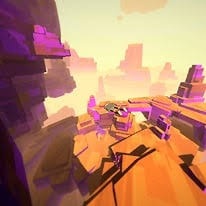
Superflight is a wingsuit flying game by GrizzlyGames, built around colorful mountain formations and risky flights close to the scenery. The central challenge is to choose a line through the rocks, judge how much space you have, and earn points without colliding. Procedurally generated landscapes give you different shapes to explore, from exposed faces to openings between formations. You can spend a session looking for interesting routes or concentrate on improving a particular run. Begin with room to maneuver and let the terrain become familiar before trying the tightest passage in view.
Start from the game menu
Press Play game on this page to load the embedded player, then choose Play on the Superflight title screen. The browser build also presents Maps and Settings entries. Before committing to a difficult flight, check the available settings and learn how the steering responds in open space. Click inside the player before using your keyboard so that your input reaches the game. Test one direction at a time and return to a comfortable line between adjustments. The exact keyboard bindings, touch controls, and controller behavior of this port still need verification; follow any instructions shown inside the game.
Read a route before approaching it
A useful first goal in Superflight is to pass one recognizable landmark with enough clearance to choose where you go next. Look for a broad face or an isolated tower rather than a complicated cluster of rocks. As you approach, identify both the point you want to pass and the open space beyond it. An attractive gap is a poor practice target if you cannot see its exit. Treat the first attempt as a survey: notice where the landscape narrows, which edges hide another obstacle, and how early you need to begin a correction.
Build up to close passes
Proximity flying is the scoring idea at the heart of Superflight. Flying near the landscape creates a reason to take risks, but a narrow margin leaves less room to recover from a poor approach. Practice a generous line beside a rock face, then try moving a little closer on a later attempt. Change one part of the route at a time so that you can tell which adjustment helped. Avoid combining a new steering input, an unfamiliar opening, and a much closer pass in the same experiment. A repeatable route gives you a useful baseline for judging progress.
Look beyond the next opening
When a passage catches your attention, plan the approach and departure together. Try to arrive already lined up with its center instead of making a large last moment correction at the entrance. Once you have a clear route through, shift your attention toward the next area of open space. Looking only at the nearest wall can make every movement feel reactive. If the approach becomes awkward, choose a wider route for that attempt. Passing up one difficult opening can leave you better placed to learn a different part of the formation and find a more comfortable way back.
Use short attempts to learn
Give each attempt a specific question: can you clear that overhang, stay alongside a wall for longer, or leave a gap facing open terrain? After a collision, think about where the route first became difficult rather than only the final impact. An earlier turn or a wider entry may be easier to reproduce than a dramatic escape at the end. Watch the score after the maneuver when it is safe to do so; staring at the counter during a close pass takes attention away from the rocks. Small, deliberate experiments make a short session useful even without a new high score.
Explore maps at your own pace
The original game includes a map seed system for revisiting and sharing landscapes. In this browser build, start by exploring the Maps menu to see which options are actually available. When comparing routes, keeping the same landscape makes it easier to recognize whether your line has improved. When the scenery feels too familiar, a different formation can give you a fresh navigation problem. Do not assume that a map or score will survive closing the page until you have tested that behavior. If the player displays a seed you want to revisit, keep your own note of it.
About this browser build
This Superflight page embeds the third-party Unity WebGL build at wasm.rip. Its title screen credits the port to Zay and currently displays No online rank beside the high score and best combo fields. A working menu does not establish that online ranking or persistent scores are supported here. Audio and recovery of scores after a reload remain unverified. Allow the initial game download to finish before looking for the title menu. The Reload button below the player restarts the entire embedded page, so use the game's own menus when you only want to change an option or start another attempt.