

About the game
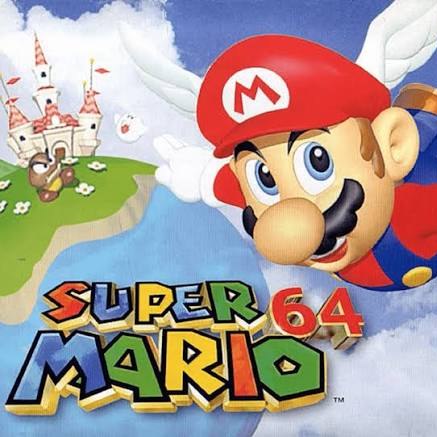
Super Mario 64 is Nintendo's 1996 three dimensional platform adventure for the Nintendo 64. Mario arrives at Peach's castle after receiving an invitation, only to discover that Bowser has taken its Power Stars. The castle connects a collection of courses, many reached through paintings. Stars unlock more doors, while some routes require keys. Exploring a course again can reveal a different objective rather than simply repeating the same finish line.
The version embedded here uses a Nintendo 64 emulator and a USA game image. It is the original console edition, rather than the later Nintendo DS remake. For a first visit, aim to collect the opening star in Bob-omb Battlefield. That gives you a concrete route, a boss to defeat and a reason to learn movement before attempting more demanding platforming.
Default keyboard controls
Super Mario 64 uses the analog stick for Mario's movement. In this emulator's default keyboard configuration, T moves the stick up, G down, F left and H right. X is the N64 A button for jumping; S is B for attacks, talking and picking things up; Tab is Z for crouching; Enter is Start. The arrow keys represent the separate N64 D-pad, so they should not be confused with Mario's analog movement controls.
The camera's C buttons are mapped to I for up, K for down, J for left and L for right. Q and E correspond to the N64 L and R shoulder buttons. These mappings come from the current emulator configuration, rather than a test of every key. Open Control Settings in the emulator toolbar if your inputs differ or if you want to arrange movement and actions more comfortably. Click inside the game before using the keyboard.
With the defaults, crouching and jumping uses Tab and X; jumping and then pressing Tab performs a ground pound. For a long jump, run, press Tab and then X. Practice that sequence outside the castle before using it beside a drop. Console instructions that say A, B or Z refer to N64 buttons; pressing the matching keyboard letter will not necessarily perform that action.
The first course: Bob-omb Battlefield
From the file selection screen, choose a file and begin the adventure. The first course in Super Mario 64 is Bob-omb Battlefield, with the opening mission Big Bob-omb on the Summit. Your destination is the top of the mountain. Follow the main route across the battlefield and up the winding mountain path. Goombas, Bob-ombs, Chain Chomp and rolling iron balls are hazards along the way.
The climb is an opportunity to learn where the path bends and where an obstacle approaches. Give the rolling balls room to pass instead of jumping toward them without checking the landing. If the camera hides the next section of path, adjust it from a wide part of the route. Keep the mountain summit as your destination; collecting every visible coin or investigating every side route can wait until you know the way up.
How to defeat Big Bob-omb
The opening boss in Super Mario 64 requires grabbing rather than repeated punches. Move around Big Bob-omb, approach his back and press B to lift him; with the default keyboard mapping, that means S. Press B again while directing the throw to send him onto the summit floor. Land three successful throws to defeat him and release the Power Star.
Avoid approaching directly from the front, where he can grab Mario and throw him away. Throwing the boss off the summit does not count as a successful hit: he returns and makes you restart the fight. Turn toward the interior of the plateau before throwing. After each hit, give yourself room to circle behind him again instead of pressing the attack button repeatedly while standing in his reach.
Stars, movement and your next attempt
Progress in Super Mario 64 comes from choosing new objectives as more of the castle opens. You do not need every star to continue. Read the mission name when entering a course, and use it to decide whether you are looking for a destination, an enemy or a collection task. Returning with one clear objective is more productive than retracing every path without knowing what you want to find.
Separate a movement problem from a navigation problem. If you can reach the summit but lose to the boss, focus on circling and grabbing. If you keep falling on the climb, work on the troublesome turn before adding long jumps. The camera can help you see a landing, but changing it during a jump also changes your visual reference. Set up the view before taking off whenever the route allows. Cross-session progress persistence in this embedded version has not been verified.