

Emulator Games: Kanto Adventures, Platforming and Fighting
The emulator games here cover Game Boy, Game Boy Advance, Mega Drive/Genesis, PlayStation and arcade releases. Pokemon Red and Pokémon FireRed follow a Trainer through Kanto; Sonic the Hedgehog focuses on momentum, rings and platform routes; Tekken 3 and Teenage Mutant Ninja Turtles offer different kinds of close combat. Super Smash Bros adds platform fighting to the selection through its BattleShip browser port. Compare the goals below: earning Gym Badges, reaching an act exit, emptying a rival's health bar and knocking someone off a stage call for different decisions.
Pokemon Red: build a team for Kanto's Gyms
Pokemon Red starts in Pallet Town and takes you through routes, towns and Gym challenges toward the Pokémon League. Catching adds partners to your team, while battles provide experience for their growth. Type matchups give the move menu its purpose: Water attacks help against Fire, and Fire attacks help against Grass. Pokémon Centers restore the team; Poké Marts sell Poké Balls and recovery items. The listed browser edition is a full-color modification of the Game Boy game. Among these emulator games, it offers the earlier Kanto adventure, rather than FireRed's later presentation. Its default keyboard mapping uses arrows to move, Z to confirm, X to cancel and Enter for Start.
Pokémon FireRed: deliver Oak's Parcel, then face Brock
Pokémon FireRed revisits Kanto on Game Boy Advance. After choosing Bulbasaur, Charmander or Squirtle, travel along Route 1 to Viridian City's Poké Mart, collect Oak's Parcel and return to the laboratory. Delivering it gives you the Pokédex and five Poké Balls. The next stretch leads through Viridian Forest to Pewter City, where Brock uses Geodude and Onix. Water and Grass attacks are particularly effective against their Rock/Ground typing. Catching a wild Pokémon requires leaving it conscious: lower its HP, then select a Poké Ball from the Bag. Your traveling party holds six Pokémon, with additional captures sent to PC storage.
These two Pokémon emulator games reward decisions between battles as well as move selection during them. In FireRed, a Pokémon can know four moves, and each move has limited PP. A Potion restores HP but does not replenish an exhausted attack; a Pokémon Center restores both. Keeping a status move can help with catching, while retaining attacks of different types gives the team more answers to opponents. The choice between the two entries is a choice of Kanto edition, not a switch from turn-based battles to action combat.
Sonic the Hedgehog: keep rings and control momentum
Sonic the Hedgehog brings the Mega Drive/Genesis game to this selection of emulator games. Green Hill Zone introduces slopes, enemies and branching platform routes. Rings protect Sonic from ordinary enemy damage, but a hit scatters them; recovering a nearby ring can restore that protection. Checkpoint lampposts reduce how far a lost life sends you back, and each act has a ten-minute limit. Reaching an eligible non-boss goal with at least 50 rings lets you jump into a giant ring for a rotating Special Stage. There, the objective changes from reaching the normal act exit to pursuing a Chaos Emerald while avoiding Goal blocks.
Tekken 3 and Super Smash Bros: two ways to win a fight
Tekken 3 uses a health bar and four main attack buttons: left punch, right punch, left kick and right kick. The original PlayStation inputs are Square, Triangle, Cross and Circle; the emulator's control settings show their keyboard assignments. Guarding depends on attack height. Holding back defends against high and middle attacks, while crouching guard covers lows and leaves you vulnerable to middle attacks. Sidestepping adds movement into the foreground or background, so distance is not the only way to make an attack miss.
Super Smash Bros replaces that health-bar contest with damage percentages and stage boundaries. Raising an opponent's percentage makes them easier to launch, but the knockout comes from sending them beyond the battlefield. Jumps and landing positions therefore affect survival alongside attacks. Mario, Link and Pikachu provide different movement and attack options. Unlike Tekken's arena exchanges, a hit near the edge can become a fight to return to solid ground. This classic console entry sits alongside the emulator games through a browser port; its version should not be confused with later Smash releases.
Teenage Mutant Ninja Turtles: fight along the arcade street
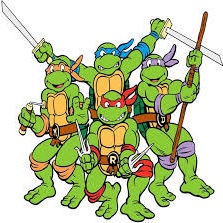
Teenage Mutant Ninja Turtles is Konami's 1989 arcade brawler, with Leonardo, Michelangelo, Donatello and Raphael setting out to help April. Movement uses the width and depth of the scene: an enemy standing above or below your Turtle may be outside your weapon's line even when they look close. Player one's defaults use arrows to move, Z to attack and X to jump; 5 adds a virtual credit, and Z joins. F1 opens the control mappings. This entry in the emulator games collection currently requires your own compatible MAME tmnt ROM archive before play, unless it is already cached in the browser.